
Why You Keep Putting Things Down Instead of Away (And How to Fix It)

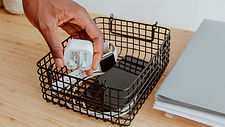
There’s a moment that happens dozens of times a day.
You walk into a room holding something.
You set it down.
And you tell yourself you’ll deal with it later.
It doesn’t feel like a big decision.
It barely feels like a decision at all.
But that one small action is where most clutter actually begins.
It’s Not Laziness… It’s Friction
Most people assume this habit means they’re being lazy or careless.
But that’s not what’s happening.
Your brain is constantly looking for the easiest available option.
So when you’re holding something and you have two choices:
put it away properly
or set it down quickly
Your brain chooses the one that requires less effort in that moment.
Even if you fully intend to come back to it.
That’s not a discipline problem.
That’s a friction problem.
Why “I’ll Do It Later” Rarely Works
The issue with “later” is that your brain doesn’t treat it as a real task.
It treats it as a suggestion.
So when you move on to the next thing, the original item fades into the background.
Then it happens again.
And again.
Until what started as one item becomes:
a small pile
then a surface
then a space that feels out of control
Not because of one big mess.
But because of dozens of tiny, unfinished decisions.
If you’ve ever felt like clutter appears out of nowhere, this is usually why.
The Shift: Make “Away” the Easier Option
If you want to change this habit, you don’t need more motivation.
You need to change the setup.
Because habits follow path of least resistance.
So instead of trying to remember to put things away, ask:
“Is putting this away easier than setting it down?”
If the answer is no… the habit won’t stick.
What This Looks Like in Real Life
Let’s say you always drop things on the counter.
That’s not random.
That’s your brain choosing the easiest landing spot.
So instead of fighting it, work with it.
Create a defined place right there.
A small tray.
A contained spot.
Something that turns that drop zone into an intentional space.
If you want a few simple options that work without taking over your space, I’ve gathered some easy, practical pieces HERE that can turn those problem spots into something functional.
Why This Works (The Psychology Piece)
When something has a clear, visible home, your brain recognizes it faster.
There’s no pause.
No hesitation.
No “where does this go?”
That removes the friction.
And when friction is removed, the better habit becomes automatic.
Not because you’re trying harder.
But because it’s easier.
The Easy but EXTRA Tip
If you notice the same clutter showing up in the same places, don’t try to eliminate the behavior.
Redirect it.
Create intentional drop zones where things naturally land.
But here’s the key:
Keep them contained.
A tray instead of a pile.
A small bin instead of a surface.
A defined boundary instead of open space.
This keeps things from spreading while still working with your natural habits.
I tend to use simple, neutral pieces that blend in and don’t add visual clutter, and you can browse a few that work well in different spaces HERE if you want something easy to add without overthinking it.
Final Thought
Clutter isn’t usually created by big mistakes.
It’s created by small moments that feel too minor to matter.
But when those moments happen all day long, they shape your space.
When you make “putting things away” easier than “setting them down,” everything starts to shift.
And that’s when your home begins to feel under control again.
As an Amazon Associate, I earn from qualifying purchases.


Comments